Understanding Dyslexia in Children part 1

Dyslexia impact on a family
Dyslexia is a big word for me. I’m a dyslexic Speech Language Pathologist with 4 homeschooled dyslexic children who receive intensive intervention to address their literacy needs. I live and breathe dyslexia. I grew up with a learning disability. They didn’t say “dyslexia” back then, but I was always in special reading groups and knew I had to work 3x as hard as my peers to maintain passing grades. I do not believe I received the intervention I needed. I didn’t fully understand our English orthography until my own 4 children were diagnosed with dyslexia and I took 1000s of hours of classes to learn how to help them. I remember taking classes and tears rolling down my face because I was learning how our English language works and what I was missing all these years! There can be a lot of shame in being dyslexic. I remember not wanting to be called on to read aloud, counting the number of people ahead of me before it was my turn to read and not understanding anything I was reading. I remember the shame I had in my SAT scores or only remembering to read 2 books in high school. I remember the shame in how long it would take me to read one passage and how many times I had to re-read it before I understood it. I remember having to advocate for myself in college to have tests read aloud to me, to give my notes to my teachers to check in for understanding before I took a test. I remember tape recording my classes, rewriting my notes, needing to study in a quiet environment with music that didn’t have words (instrumental only…don’t judge me, but my favorite was Yanni, Dare to Dream). A hat helped me stay focused on my studies. I also always sat up front in class and made sure to stay in close contact with my professors to check in for understanding. I was a hard worker, but also didn’t have much of a social life as the downside. I remember my neurology graduate teacher at Vanderbilt University told me “You have a language learning disability, and you will never become a Speech Language Pathologist.” Thankfully I didn’t let that statement hold me back. I was never a good test taker. I’ve always been a kinesthetic hands-on learner…I learn by doing.
I remember getting confused on how to spell many words even as an adult including: then/than, sweet/sweat, chose/choose, loose/lose, principle/principal, diarrhea, and many more! Now if there is a word that stops me in my tracks, I study it and learn about the etymology, phonology and morphology of the word and the word family which give me an anchor for how to spell the word and deepens my understanding of that word. Now after years of study, I can look at a word that I do not know and pull apart the affixes, identify the base and know what the word means without having to look it up (for example: autochthonous). Words my kids often misspelled include knock (nock), tutoring (toot-ring), daughter (dater), wrap (rape), does (duz), permission (permishen), friend (frend) and many more! We take the words that they have difficulty with and turn them into a word study where we look at the word family and talk about WHY the words are spelled that way, exploring the structure of the word, the affixes, the graphemes, word relatives and more! What being dyslexic taught me is perseverance, grit and stick-to-it’ness. I don’t give up easily. After seeing my children struggle in school, become eligible for IEPs under Specific Learning Disability, I took it upon myself to become the specialist who can help them. After taking 1000s of classes on Dyslexia and linguistics focused on our English orthography, I now offer literacy intervention to my clients.
Understanding Dyslexia in Children: Causes, Symptoms, and Support Strategies
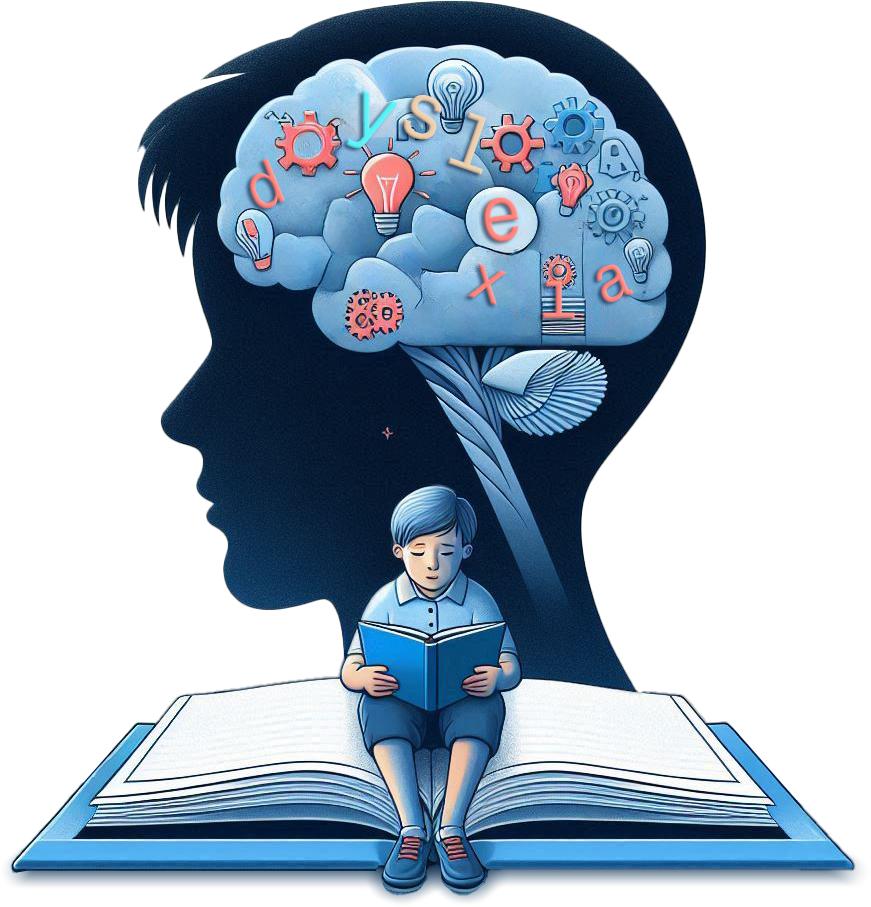
Dyslexia is a term that designates poor reading performance and cannot be explained by a primary visual deficit, hearing disorder or neurological disease. Dyslexia is a specific learning disability that affects a child’s ability to read, write, and spell. It’s important for parents and educators to recognize the signs early on and provide appropriate support to help children with dyslexia thrive academically and emotionally.
What is Dyslexia?
Dyslexia results from individual differences in the parts of the brain that enable reading. It tends to run in families. Dyslexia appears to be linked to certain genes that affect how the brain processes reading and language. It is not a sign of low intelligence or laziness. Instead, dyslexia occurs due to differences in how the brain processes language, particularly in the areas related to reading and spelling. My parents were never diagnosed as dyslexic, but when I talk to family members, both my mother’s and father’s side of the family were dyslexic. The apple does not fall far from the tree! If you struggled in school with reading or spelling, it is likely that your children may have the same difficulties.
Causes of Dyslexia:
While the exact cause of dyslexia is not fully understood, research suggests that it may have genetic and environmental components. Factors such as family history, brain development, and exposure to certain risk factors during pregnancy or early childhood can contribute to the development of dyslexia. FMRI studies show that dyslexic brains are different than a typical individual.
Common Symptoms:
Recognizing the signs of dyslexia early on can facilitate timely intervention. Some common symptoms of dyslexia in children include:
- Difficulty with Reading:
Children with dyslexia often struggle with decoding words, recognizing sight words, and understanding the meaning of text. - Poor Spelling:
Dyslexia can impact a child’s ability to spell accurately due to difficulties with phonological processing, grapheme-phoneme correspondence. Poor spelling can also be a result a weakness understanding of how the English Orthography works including understanding base elements, affixes, stress, etymology, morphology, and phonology. - Slow Reading Rate:
Children with dyslexia may read slowly and laboriously, often with frequent pauses and errors. - Difficulty with Phonological Awareness:
Dyslexia can affect a child’s ability to identify and manipulate sounds in words, which is crucial for developing reading and spelling skills. Difficulty with phonological awareness does not occur with all dyslexic children and it is important to not that phonological awareness does not have to be an isolated skill taught outside of a meaningful written word. - Challenges with Writing:
Dyslexia may also impact a child’s writing abilities, including handwriting, grammar, punctuation, and organization of ideas.
Many children with dyslexia also struggle with central auditory processing disorder (CAPD) and visual processing disorder where the eyes do not work well together (eye teaming) making reading fatiguing. It is important to see a developmental optometrist and audiologists that specialize in these processing deficits. My children all have CAPD and visual processing deficits. They have all completed auditory and vision therapy. CAPD and some visual processing symptoms continue including sensitivity to noise and eye fatigue. I personally wear prism glasses which have made a huge difference in my eyes working together and causing less fatigue when reading.
Many dyslexic individuals may also have slower processing speed or poor working memory which makes seeing a word and remembering it difficult. Your average learner only needs to see a word 3 times before remembering it. Having poor processing speed and working memory can absolutely make learning slower and why they need DIFFERENT teaching.
ADHD can also be a comorbid condition but is often over diagnosed. When a child is a struggling reader, struggling in school, and has auditory and visual processing deficits including a language impairment, their condition may look like ADHD when it is not. ADHD is truly a chemical imbalance. Many ADHD assessments that a psychologists may conduct include a questionnaire the family has to complete and many of those questions overlap with the symptoms of a learning disability, language impairment, auditory and/or visual impairments. For my family, ADHD was never a formal diagnosis but something that has been discussed by their assessors and therapists. I do find that giving them a special coffee drink in the morning helps. The coffee drink we have made can include butter, peanut butter, coconut oil and propolis honey. My kids can be sensitive to high fructose corn syrup, dyes, and benefit from protein throughout the day.