Understanding Dysgraphia


Understanding Dysgraphia: Navigating the Challenges of Writing
Dysgraphia is a specific learning disability that affects writing abilities, making it difficult for individuals to express their thoughts on paper. It can manifest in various ways, impacting handwriting and overall written communication. In this blog, we’ll explore what dysgraphia is, its symptoms, how it can affect learning, and strategies to support those who struggle with it.
What is Dysgraphia?
Dysgraphia typically shows itself as poor handwriting. It can occur alongside other learning disabilities, such as dyslexia, or it may exist independently. It may also coexist with visual processing deficits. Individuals with dysgraphia often know what they want to say but find it challenging to get those ideas down on paper. Dysgraphia isn’t a matter of intelligence. The challenges are often caused by trouble with motor skills which can improve with therapy.
Symptoms of Dysgraphia
Recognizing dysgraphia can be the first step toward support and intervention. Some common symptoms include:
- Poor Handwriting:

Letters may be poorly formed, inconsistent in size, or unevenly spaced. Letters and words may look like they are floating, and the letters do not sit on the baseline of the paper. Individuals may mix up capital and lowercase letters as well. - Slow Writing: The writing process can be time-consuming, leading to frustration during exams or written assignments.
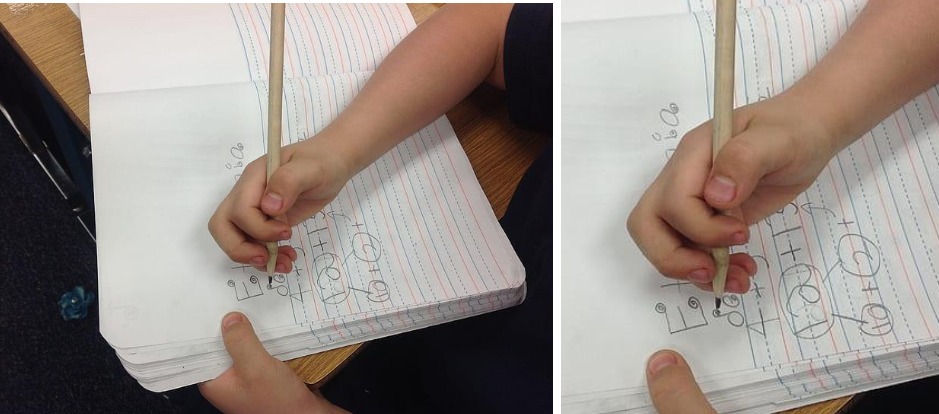
- Physical Discomfort: Individuals may experience fatigue or discomfort when writing for extended periods. Pain can develop when the individual is holding the pen the wrong way which is common for individuals with dysgraphia.
- Pen Hold: Individuals may have trouble holding and controlling the writing tool. The individual may hold the pen with 4 fingers, use too much pressure, show hyper-extension of the joints and use thumb wrapping or tucking.
- Poor Legibility: Individuals may write with poor legibility where they have trouble reading back their own writing or making their writing clear enough for others to read. We write to make our thoughts visible for others to read, so if an individual’s writing is not legible, this needs to be address. There are times in people’s lives where handwriting is necessary as not all things can be typed. It is essential that individuals learn how to write legibly.
- Letter & Number Reversals: Letter and number reversals can be common for individuals with dysgraphia, especially when they are not taught the specific starting place and pathway for each letter and number. When students are left to trace, they can develop their own errored motor plan. Letter and number reversals should no longer occur by the time a child is 8 years of age. No letters or numbers should start at the bottom and move up. Reversals can also be a sign of visual processing deficits.
How Dysgraphia Affects Learning
Dysgraphia can impact a student’s academic performance and self-esteem. Writing is a critical component of many subjects, and difficulties in this area can lead to challenges in expressing knowledge. This can result in:
- Decreased Academic Performance: Students may struggle to complete writing assignments or tests on time.
- Reduced Participation: Fear of making mistakes can lead to reluctance to engage in class discussions or written tasks. Many children with dysgraphia will avoid writing. At times typing may be preferred over handwritten tasks.
- Emotional Strain: Frustration and anxiety can arise from the ongoing struggle with writing, affecting overall motivation and self-worth.
Strategies for Support
Fortunately, there are various strategies and tools available to help individuals with dysgraphia succeed:
- Use of Technology: Tools like speech-to-text software and word processing programs can help alleviate the pressure of writing by allowing users to speak their thoughts. Assistive Technology is important and very much needed but does not replace the need of the child learning to write with the correct starting place, pathway, spacing and placement on the paper. Both assistive technology and authentic handwriting therapy is necessary.
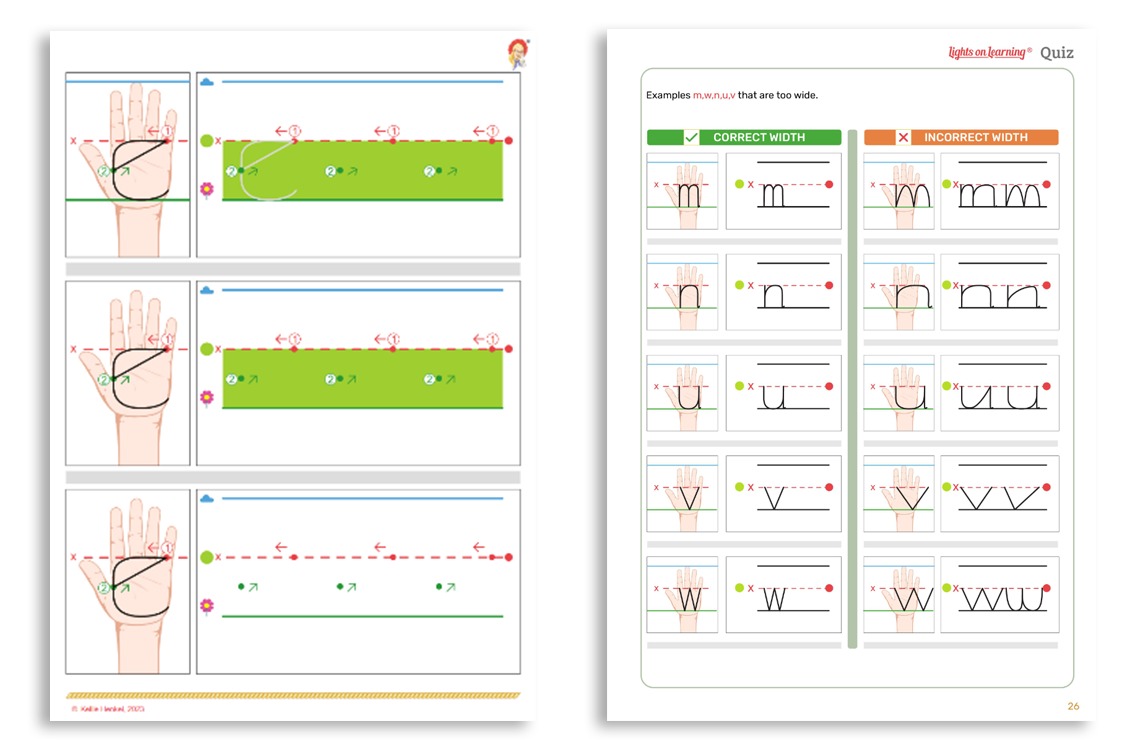
- Multisensory Learning: Incorporating different senses into learning activities can enhance understanding. For example, using tactile materials to form letters can reinforce writing skills. At Lights On Learning we use a light grain sand paper hand to trace letters on. You can also use shaving cream or sand on a baking sheet. You can also have the child trace the letter on the table or any surface with a little texture. The child can also trace the letters with their pointer finger of their dominant hand on their non-dominant hand. So, if they are right handed, they can trace the letters on their left hand. Using the hand to trace the letters is great because it gives the child the correct proportions with regards to x-height, baseline, ascender and descender areas. The baseline (middle line) is the crease where the fingers meet the palm of the hand. The palm is the x-space. The base of the palm is the baseline (bottom line). The wrist is the descender area and the fingers are the ascender area.
- Handwriting Therapy & Instruction: The most important part of any kind of tracing is to make sure the child is starting the letter or number in the correct place and moving in the correct direction / pathway. Letters are not shapes and should not be correlated with shapes. Avoid telling the child to write letters as shapes such as, “make an <a> with a ball and a stick.” Instead, give them specific instructions on where to start the letter and the pathway. For the letter <a> the pathway would be “start at the x-height, push (for a right hander)/pull (for a left hander) along the x-height, down to the baseline bounce the x-height, straight down and out.” It takes practice to teach the child the correct pathway for letters and numbers. When children are in school, their writing may not be monitored, and they may be practicing the wrong motor plan for these letters and numbers, so it does take specific instruction and therapy to un-do all that erroneous practice. Like any skill, it takes time and repetition to master a motor plan to the point where it becomes automatic where the child does not have to think about how to write the letter or number. The more the child practices writing the letter and number with the wrong motor plan, the more that motor plan becomes solid and the more time and repetition it will take to correct that motor plan.
- Specialized Paper:

At Lights On Learning we have developed specific scaffolded paper to give the child more structure for all the necessary boundaries such as the x-height, baseline, ascender and descender. We have paper for all grades such as Kindergarten, 1st, 2nd and 3rd grade and beyond. We also have templates for each letter, number and grapheme for the child to have specific instruction and modelling on where to start the pathway of each letter and number. The paper includes prompting for where to start writing on the paper and where to stop writing on the paper as many children with dysgraphia have a tendency of starting in the middle of the paper instead of the left side. The paper templates is available in our store. - Pen Grips:

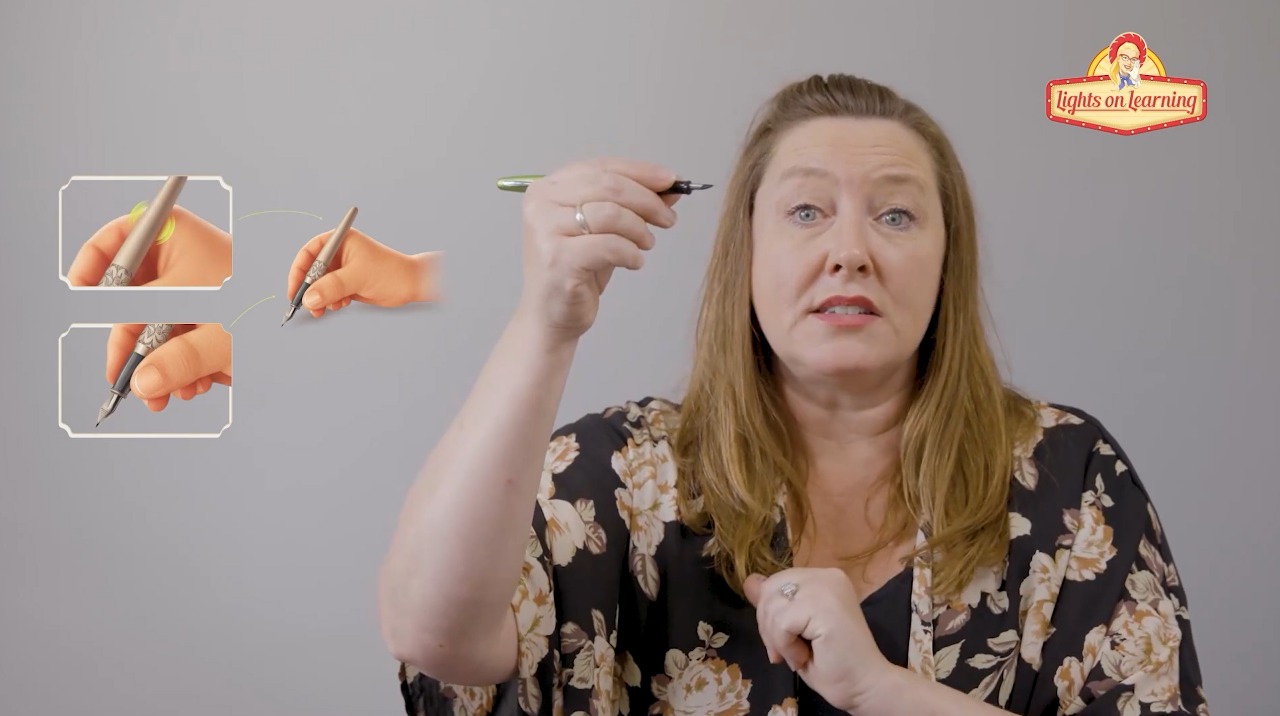
Pen grips can be helpful so the child can learn how to hold the pen. It is important to fade out these pen grips so the child can hold the writing tool without a pen grip. The most common pen hold is the dynamic tripod. Have the child hold the pen with the index finger and thumb like an “ok” sign and then bring the rest of the fingers to rest. Avoid writing with pencils as they require too much pressure. Try writing with a pen with easy ink flow, including Kindergarteners! I personally like Pilot precise pens. I also like Frixion pens which are erasable and come in fun colors. - Modify Assignments: Offering alternatives to traditional writing assignments, such as oral presentations or visual projects, can help students showcase their knowledge without the stress of writing.
- Structured Writing Practice: Breaking writing tasks into smaller, manageable steps can help reduce overwhelm. Encourage students to outline their ideas before writing.
- Encouragement and Support: Creating a supportive environment where mistakes are viewed as learning opportunities can boost confidence and motivation.
- Professional Guidance: Working with educators, special education professionals, or occupational therapists can provide tailored support and interventions.
How is Dysgraphia Diagnosed:
Dysgraphia isn’t an eligibility under the IDEA (Individuals with Disabilities Act) but falls under “written expression” for Individual Education Plan eligibility. Dysgraphia typically is diagnosed by an Occupational Therapists who specializes in fine motor skills that are involved in handwriting. Lights On Learning does specialize in diagnosing and treating dysgraphia. The handwriting book and videos we have in our store were designed with the help of an Occupational Therapist to make sure our handwriting document and videos under our membership is not only helpful but effective using evidence-based methodologies.
Conclusion
Dysgraphia can present significant challenges, but with understanding, support, and the right strategies, individuals can learn to navigate these hurdles. Raising awareness about dysgraphia is essential for fostering an inclusive environment where everyone can thrive. If you or someone you know is struggling with dysgraphia, remember that help is available, and success is within reach. Let’s work together to ensure that every voice is heard, and every story can be told, one word at a time.
Lights On Learning has a free handwriting quiz parents and teachers can use to determine if their child may have dysgraphia or needs extra help with their handwriting. We also have a free <b/d> reversals document to help children be able to read and write those common letter and number reversals such as: b/d, p/q, s/z, u/n, s/z, w/m, 2/5, 6/9! Lights On Learning also offers handwriting therapy to address dysgraphia and the fine motor and motor planning challenges that come with handwriting. Reach out to us to schedule an evaluation or a free consultation.